
Spring Quarter at Ohio University means one thing. Fest season.
A fest is part-drinking marathon, part-block-party on a designated off-campus street populated primarily by upperclassmen. Ohio University is in no way, shape or form affiliated with the parties, referred to as “unauthorized multi-house parties in Athens that have historically occurred in off-cam-pus neighborhoods each spring,” by Ohio University President Roderick McDavis in an email sent to parents regarding this year’s Palmer Fest.
After the school suffered embarrassment and less-than-favorable national attention after the “riot” at the 2012 edition of Palmer Fest, Dean of Students Ryan Lombardi and McDavis devised a strategy they hoped would prevent any major incidents at Mill Fest scheduled for the following weekend.
The two Ohio University representatives asked for students and fellow faculty members to volunteer four hours of their time to serve as a physical presence and extra sets of eyes and ears for the police forces of Ohio University, Athens County and various other stations from the surrounding areas that sent in additional police support.
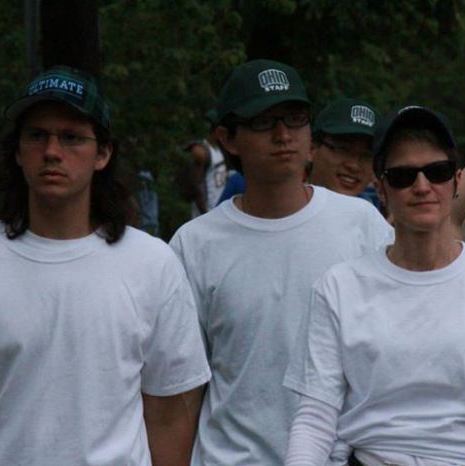
The students boldly volunteered to wear clearly marked “Ohio Staff” shirts and hats, sacrifice a few hours of fun in the sun with some adult beverages, and walk up and down Mill Street between noon and 8 p.m., Saturday, May 12th. The groups’ main responsibility focused on monitoring dangerous and/or illegal activity.
Ohio University’s response to the “Palmer Fest Riot” sent a clear message: not every student is necessarily proud of the school’s “party” reputation. Students should have fun and enjoy their college years, but they must maintain a certain level of responsibility.
At Athens’ notorious Palmer Fest, held this year on April 28, 2012, the sun slowly disappeared behind rain clouds while throngs of students started fleeing from bunches of SWAT, undercover and mounted police forces. Smoke rolled out of the windows of 11 Palmer Street while firefighting crews arrived on the scene to try and tame the flames. Palmer Fest has been known to bring about some minor fires, such as couches or piles of garbage, but a house going up in flames was completely unexpected and in need of immediate attention and cooperation. Students were instructed not to block the street and to remain out of the way as officials dealt with the fire.
Athens’ mayor Paul Wiehl declared Palmer Street a riot area shortly after 7:30 p.m. that evening. Police officers dressed in full riot gear, greatly outnumbered by the slightly intoxicated revelers, maintained the crowd, worrying for everyone’s safety. Crews extinguished the fire shortly before 9 p.m. but cleared the street. Palmer Fest 2012 ended before Saturday Night Live.
The state fire marshal office later determined a visiting student started the fire, turning the incident into a case of arson. Because of Ohio University’s quarter system, classes are still in session when students at many other universities are already done for the summer. Looking for a place to party, students from other universities flock to Ohio University, adding drastically to the number of party-goers at every “Fest.” It’s largely these students who account for the majority of the arrests at the major fests and cause the most problems. Additionally, a video that went viral on the Internet of an inter-view with an extremely intoxicated party-goer further damaged Ohio University’s reputation despite the fact that the interviewee wasn’t even a Bobcat.
Dean Lombardi and President McDavis saw a need to address the problems of the fests and devised a plan similar to the one used for infamous Hall-“OU”-ween party in Athens. The October party brings in tens of thousands of costumed partiers every October. An email from Dean Lombardi asked for student and faculty volunteers for two separate shifts, from noon to 4 p.m. and 4 p.m. to 8 p.m.
Nearly 100 students and faculty member volunteers arrived at Jefferson Hall for the 12 to 4 p.m. shift shortly before noon on Saturday to receive a briefing on their duties and expectations. The volunteers were then separated into teams of three to six students led by a faculty member. The groups walked up and down Mill Street and the surrounding alleys for their allotted shift, witnessing the fest turned into a few front porch drinkers to lawns full of people clutching red Solo cups and different alcoholic beverages.
President McDavis summed up the volunteers’ duties as, “We’re here to be helpful. We’re here to be eyes and ears. We’re here to provide a physical presence.”
Dean Lombardi praised the volunteers, mentioning a quick and heavy response to his email.
“The great response says a lot about our student body and our community,” he said. “We don’t want to see a repeat of Palmer Fest.”
Ohio University Chief of Police Andrew Powers expressed gratitude for the extra help and stressed his goal to keep the volunteers safe as a top priority. Athens County Chief of Police Tom Pyle echoed his sentiments.
Many of the faculty members got a kick out of seeing their students enjoying Mill Fest, while many of the student volunteers received an earful of varying opinions from the crowds.
One girl wondered if the volunteers were part of a bar shuffle or pub crawl, sarcastically asking, “Are you guys on a shuffle? ‘Ohio Staff’ shuffle, woohoo!”
The volunteers proved to be counterproductive for at least one of the parties. One girl informed a group of volunteers that the party people took a shot of liquor every time they saw a group of the white shirts pass.
Numerous opinions were offered from early Mill Fest participants, from the welcoming, “(Explicit) you guys!” to sarcastically asking if any of the volunteers would like a beer. Luckily, none of the confrontations turned violent.
One shirtless male asked Dean Lombardi if he wanted to hold his “dancing stick,” which was liter-ally a broken tree branch he was dancing with and handing to other people, to which the Dean politely declined. At another party, a DJ asked President McDavis if he would like to take his microphone and perform a freestyle rap for the crowd. McDavis also politely declined.
Some partygoers took the time to stop and ask the volunteers for information as to what was and wasn’t within the bounds of legality.
The volunteers served their purpose, serving as a physical presence, reminding students not to get too out of hand. Mill Fest continued into the evening without much trouble and never came close to the unfortunate events of the previous weekend’s Palmer Fest.
While the Fests are likely never going to die, even with the upcoming transition to semesters, the volunteers proved they can be contained, making sure no one is put into unnecessary danger. President McDavis and Dean Lombardi’s volunteers proved that some students are striving to help change the school’s reputation, and slowly but surely, more students will jump on the bandwagon.
Originally posted on TheEssayMag.com.
 Jacob Betzner